Biographies – Those Who Served
VX41773 Acting Corporal Stanley Alfred BARKER
Stanley Alfred Barker was born 2 September 1902 at South Yarra, the son of Waler John Barker and his wife Louisa Hitchcock.
In 1928 he married Annie Elizabeth Beck and they had three children, William, Margaret and John.
Stanley was a farmer of Carinya in Wandin when he enlisted 11 July 1940 at Ringwood and on 30 July 1941 he embarked per HMT “E E” and disembarked in Singapore 18 August 1941 he was part of the 2/29 Australian Infantry Battalion.
He was one of 145 men who were massacred by the Japanese at Parit Sulong on 22 January 1942 during the Malaya Campaign when wounded Australian and Indian soldiers were left behind by withdrawing troops after the Battle of Muar. They were rounded up by the Japanese and forced to surrender all of their belongings including their clothes, which were later returned. The men, now Prisoners of War (POWs) were beaten, tormented and denied food, water and medical attention.
At sunset on the night of 22 January 1942, the men were roped or wired together in groups and led into the jungle where they were shot with machine guns, doused with petrol and set alight. Only Lieutenant Ben Charles Hackney and VX52333 Private Reginald Arthur Wharton survived, feigning death despite repeated brutalities by the Japanese.
No known grave – “Known Unto God” (CWGC) Official Commemoration – Memorial Location: Column 129, Singapore memorial (within Kranji War Cemetery)., Singapore Memorial, Singapore
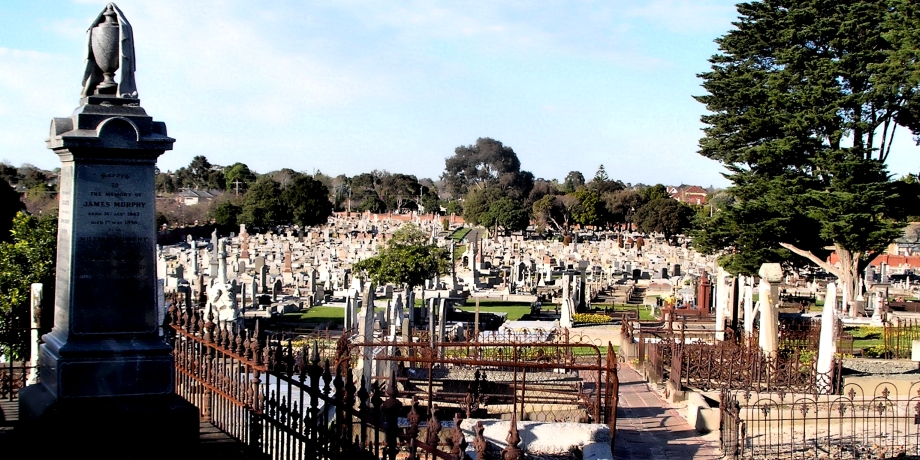
Stanley is remember on the headstone of the family grave at the Brighton Cemetery at Methodist E Grave 1.
Source: NAA, Nominal Rolls, https://www.awm.gov.au/collection/C371666, BDM’s, Brighton Cemetery Registers
341 Lance Sergeant Hugh James MARTIN OBE
Hugh James Martin [known as Jimmy] was born 7 January 1875 in Liverpool, England, the son of Joseph Martin and his wife Ellen Charlton. Martin was Baptised 19 February 1875 at St Peters in Lancashire, England.
Hugh and his siblings arrived in Australia with their mother Ellen in 1888 aboard the Rossdhu. The children’s father, Joseph Martin a Liverpool Pilot did not come to Australia, he died in Liverpool in 1893.
In 1916 he married Amelia Veronica Shelley and they were to have two children, a child who died at birth in 1919 and a daughter, Veronica Dorothea who was born in 1922.
He enlisted 10 December 1915 and with the 37th Battalion he embarked from Melbourne, Victoria, on board HMAT A34 Persic on 3 June 1916.
On 7 June 1917 Hugh was wounded in action and admitted to the 9th A F Ambulance and then transpired to the 14th General Hospital at Wimereaux and on 9 June he embarked for England with a shrapnel wound to his left arm and was admitted to 1st Southern General Hospital in Birmingham.
Hugh was temporarily attached for duty to the A A Pay Corps from the 37th Battalion on 5 October 1917.
1 February 1918 on board HMAT SS Balmoral Castle he left England disembarking at Adelaide for Melbourne.
In 1920 Hugh became a member of the Victorian RSL Executive and was State Treasurer, of the R S L from 1921 to 1926, State president in 1928, and member of State executive for 30 years. He helped organise the first Anzac Day march in 1925 and supported recognition of the day as a public holiday, where the entire nation could pause to remember those who served in WWI.
He was a Life Deakin of the Lloyd Street Baptist Church in East Malvern, Vice President of the Commercial Travellers Association.
He was a Foundation Member Trustee of Anzac House Memorial Building Fund.
Hugh , died at his home in Emo-road, East Malvern, after a short illness on 3 May 1951 and was buried at the Brighton cemetery in a dirt Grave at Baptist D Grave 62.
Source: NAA, AIF Project, Trove Newspapers, BDM’s, Brighton Cemetery Registers
Captain Theodore Eric NAVE OBE 
Theodore Eric Nave was born on 18 March 1899 in Adelaide, eldest child of Thomas Henry Theodore Nave, and his wife Ethel Sophefia, née Petterson. After leaving Hindmarsh District High School, Eric joined the South Australian Railways as a clerk. Keen to serve in World War I, he joined the Royal Australian Navy (RAN) in March 1917 as a paymaster’s clerk and served at sea in the Pacific. He chose Japanese to demonstrate a required foreign language proficiency and discovered an instinctive affinity for the language. This seemingly trivial decision determined the course of his life.
While studying in Japan (1921–23), Theodore surprised officers at the British embassy with his grasp of the language and the British Admiralty asked the RAN that he be lent to their China Fleet as an interpreter and for secret code-breaking duties. While on the China Station (1925–27), he succeeded in breaking two Japanese naval codes. In January 1928 he joined the Government Code and Cipher School, Britain’s signals intelligence headquarters; and in August 1930, he transferred to the Royal Navy (RN). In 1937 Theodore became head of the code-breaking section of the all-source Far East Combined Bureau in Hong Kong.
In August 1939 the bureau was evacuated to Singapore where, on 2 September at the Anglican Cathedral, he married Helena Elizabeth Gray, a nurse who had cared for him in hospital after he fell ill in late 1938; he was then sent to Australia to recuperate.
In Australia, the RAN applied his skills to enhance its own code-breaking capabilities. In May 1941, he formed the joint army-navy Special Intelligence Bureau in Melbourne, where his team made considerable progress against Japanese codes. Together with United States Navy code-breakers, his organization later formed the Fleet Radio Unit, Melbourne. Differences in philosophy and command relationships doomed their cooperation and, after contributing to successes against the Japanese in the Coral Sea and Solomon Islands, in October 1942 Theodore was ejected from the organisation he had founded.
Nave was then posted to General Douglas MacArthur’s Central Bureau in Brisbane in December. Placed in charge of the section dealing with Japanese naval maIn 1923 he married Dorothy Funnell. terial, he made his mark, particularly in training field units to break codes in forward areas. He helped ensure that Australia’s wartime code-breaking experience and expertise were preserved in a permanent Australian organisation, later known as the Defence Signals Bureau.
Theodore retired from the RN in March 1949 and on 20 October he became a senior officer in the newly formed Australian Security Intelligence Organisation based in Melbourne. In October 1950 he was promoted to assistant director, ‘C’ branch, investigation and research, and was responsible for security during the 1954 royal visit and the 1956 Melbourne Olympic Games. Theodore retired in March 1959.
Active in the Naval Association of Australia, he became its first national president in 1960. Following the death of his wife in 1969, he married Margaret McLeish Richardson in December 1970. In 1972 he was appointed OBE for services to ex-servicemen. An enthusiastic gardener, he was president and life member of the Brighton Horticultural Society. Survived by his wife, two of the three daughters, and the son, of his first marriage, he died on 23 June 1993 at Mooloolaba, Queensland, and was buried in Brighton Cemetery at Baptist L Grave 70B
Source: by Ian Pfennigwerth Australian Dictionary of Biography, Volume 19 , 2021 – Research edited by Brian Wimborne [condensed].


